
Beyond Glasses: A Smarter Approach to Childhood Myopia
When your child's glasses prescription becomes stronger year after year, it's easy to assume that replacing their lenses is simply part of growing up. However, increasing nearsightedness may signal an underlying change in the eye that deserves closer attention. While traditional glasses correct blurry distance vision, they do not typically address the progression of myopia itself.
Today, advances in pediatric eye care offer families an opportunity to take a more proactive approach to childhood nearsightedness. At Eyecare Associates of Idaho, myopia management focuses on slowing progression while supporting clear vision and long-term eye health. Let's explore why early intervention matters and how modern treatment options can help protect your child's vision as they grow.
Understanding Progressive Myopia
Myopia, commonly called nearsightedness, occurs when light focuses in front of the retina rather than directly on it. This is often associated with excessive elongation of the eye, causing distant objects to appear blurry while nearby objects remain relatively clear.
For many children, myopia develops during the school years and continues progressing through adolescence.
A changing prescription might seem like a manageable inconvenience, but the concern extends beyond purchasing stronger glasses. Higher levels of myopia are associated with an increased lifetime risk of several eye conditions, including:
- Myopic macular degeneration
- Retinal detachment
- Glaucoma
- Cataracts
These complications are not inevitable, but the association makes controlling myopia progression an important part of preventive pediatric eye care.
Why Early Myopia Management Matters
The earlier childhood myopia begins, the more years it may have to progress. For this reason, identifying changes in vision and evaluating the rate of progression can help determine whether treatment is appropriate.
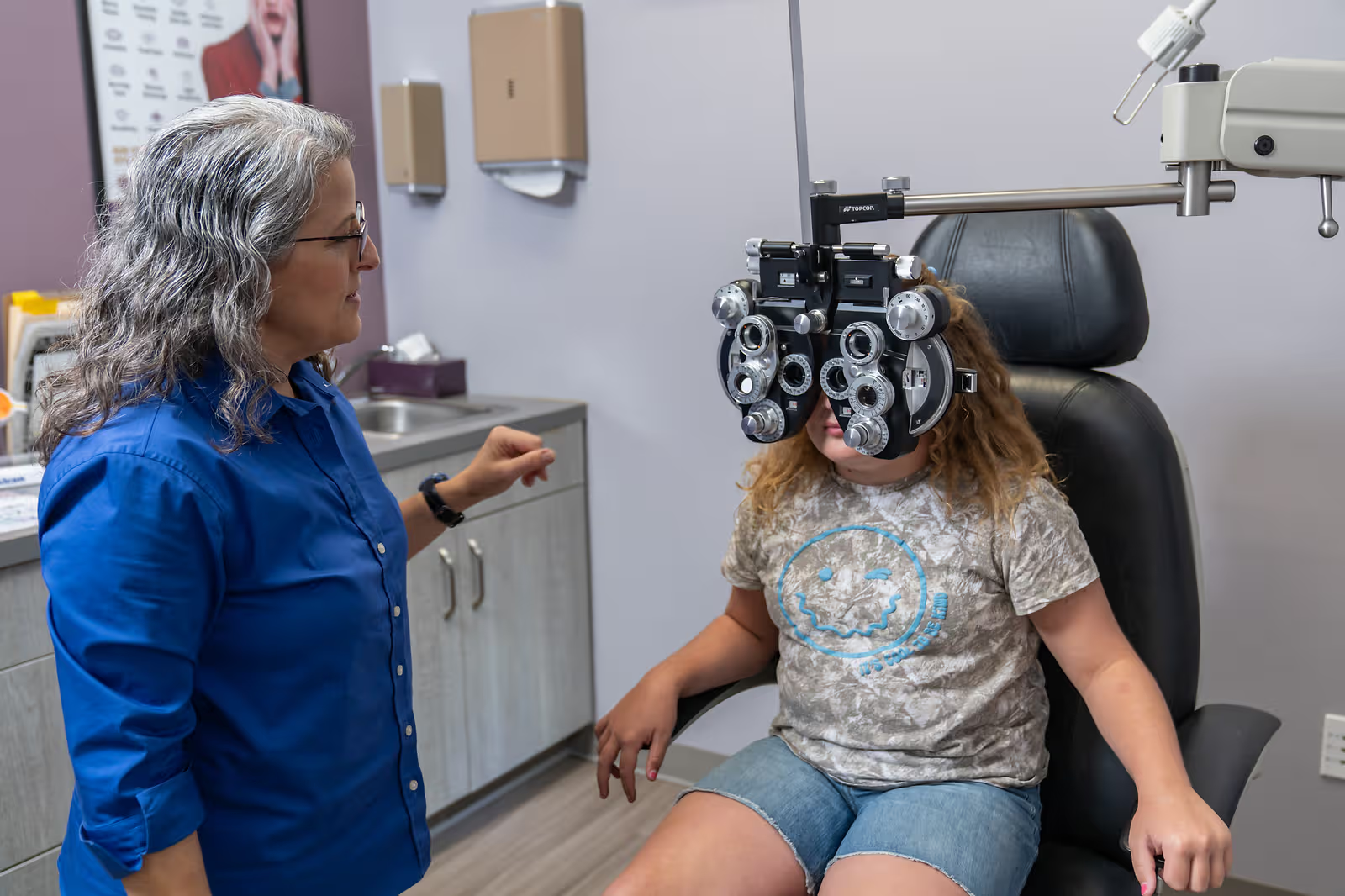
A comprehensive pediatric eye examination can assess visual clarity, prescription changes, eye health and relevant risk factors.
Your child's optometrist may also consider:
- Age when myopia first developed
- Family history of nearsightedness
- Changes in prescription over time
- Daily near-work and outdoor habits
- Eye growth and other clinical findings, when indicated
Rather than treating every child the same way, myopia management is guided by individual development, progression and treatment suitability.
Advanced Myopia Management Options
Modern myopia control treatments aim to influence the factors associated with progression rather than simply correcting blurred vision.
Several options are available, each offering different advantages depending on a child's age, prescription and daily routine.
Stellest® Spectacle Lenses
Stellest lenses use a specialized optical design incorporating highly aspherical lenslets. These lenslets create a defocusing signal intended to help slow excessive eye elongation while the central portion of the lens corrects distance vision.
For children who prefer glasses or are not ready for contact lenses, this approach offers an alternative to conventional single-vision spectacles.
MiSight® Daily Contact Lenses
MiSight daily disposable contact lenses are designed to correct nearsightedness while helping slow its progression in appropriately selected children.
Their dual-focus optical design allows children to see clearly while providing a treatment effect intended to reduce myopia progression.
Daily disposability also eliminates the need for overnight storage and lens-cleaning solutions, although children must still demonstrate safe handling and hygiene.
Therapeutic Atropine Eye Drops
Low-dose atropine is another option that may be considered for certain children with progressive myopia.
Typically administered according to a prescribed schedule, atropine treatment aims to slow progression through a mechanism that is still being studied.
Effectiveness depends on factors including concentration and individual response, so treatment requires professional assessment and ongoing monitoring.