
Because children's eyes continue to develop throughout infancy, childhood, and adolescence, regular eye exams help ensure they're seeing clearly while allowing us to monitor healthy visual development along the way. At Eyecare Associates of Idaho, we answer your questions, explain our findings, and provide recommendations that support your child's long-term eye health.
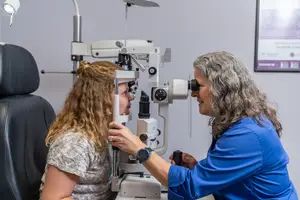
Eye Care for Children in The Treasure Valley
Helping Children See, Learn & Grow
The Link Between Your Child's Vision and Their Success
Children don't always recognize when they're having trouble seeing. Because changes in vision often happen gradually, many simply assume everyone sees the world the same way they do.
Healthy vision plays an important role in nearly every aspect of childhood. From learning to read and following lessons in the classroom to developing coordination on the playground, participating in sports, and interacting with family and friends, children rely on their vision to build new skills and experiences. By monitoring your child's eye health and visual development, we can identify potential concerns early and provide care that helps them thrive.
Children See the World Differently as They Grow

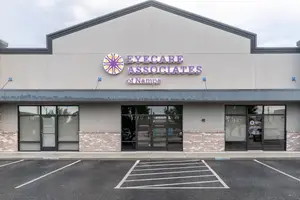
No matter where you are in the Treasure Valley, our team is committed to providing the same personalized care, trusted guidance, and advanced eye care that generations of local families have come to expect.

Our optometrists combine advanced clinical expertise with a patient-first approach, taking the time to understand your concerns and recommend care that's right for you. Get to know our team.
When Should Children Have an Eye Exam?
Most children benefit from eye exams at several important stages of development, including during infancy, before starting school, and throughout their school years. Depending on your child's vision and family history of eye conditions, we may recommend more frequent visits to closely monitor their eye health and visual development.
If your child wears glasses or contact lenses, regular annual eye exams are especially important. As children's eyes continue to grow, their prescriptions can change quickly, making routine eye care essential.
What We Look for During a Pediatric Eye Exam
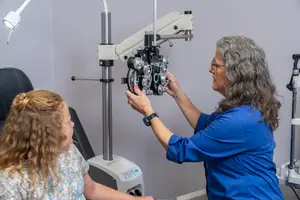
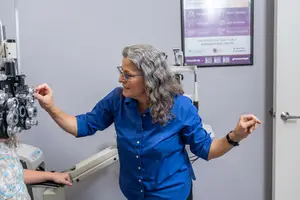
Every child is unique, and every pediatric eye exam is tailored to their age and needs. Our goal is to understand how your child's eyes are developing and to identify any concerns that could affect their vision now or in the future.
Your child's examination may include:
- Assessing vision and prescription needs
- Evaluating healthy visual development
- Checking how the eyes work together and focus
- Examining the overall health of the eyes
- Looking for signs of conditions that may affect vision or learning
- Discussing any concerns you may have
If we identify anything that requires further evaluation or ongoing care, we'll explain our findings, answer your questions, and work with you to create a plan to support your child.
Common Childhood Eye Conditions
Many childhood eye conditions develop gradually, making them difficult for children and even parents to recognize. Some of the most common childhood eye conditions we monitor include:
Myopia makes it difficult to see objects clearly at a distance and often becomes more noticeable as children begin school. Early detection allows us to monitor its progression and create a personalized myopia management plan.
Children with farsightedness may struggle to focus on nearby objects, which can contribute to eye strain, headaches, or difficulty with reading and other close-up tasks.
An irregular curvature of the cornea or lens can cause blurry or distorted vision at near and distance, making everyday activities more challenging.
Amblyopia occurs when one eye doesn't develop normal vision during childhood. Detecting and treating it early can help develop strong vision.
Strabismus occurs when the eyes don't work together as they should. Early diagnosis can help support healthy visual development.
Could Your Child Be Having Trouble Seeing?
Children don't always realize they're having trouble seeing. That's why it's important to watch for subtle signs that may indicate a vision problem. You may want to schedule a pediatric eye exam if your child:
- Squints to see objects in the distance
- Holds books or digital devices very close
- Sits close to the television
- Frequently rubs their eyes
- Complains of headaches or tired eyes
- Tilts or turns their head while looking at objects
- Has difficulty concentrating while reading or frequently loses their place
- Avoids reading, drawing, puzzles, or other close-up activities
- Experiences declining school performance or struggles to see the classroom board
Support Your Child's Eye Health at Every Age
Infants (Birth–2 Years)
Your baby's vision develops rapidly during the first two years. As they learn to focus, track movement, recognize faces, and coordinate their eyes, regular eye exams help ensure their visual system is developing as expected.
Preschool (2–5 Years)
During the preschool years, children begin developing the visual skills needed for reading, writing, hand-eye coordination, and play. Eye exams help us monitor how your child's eyes focus, work together, and support these developmental milestones.
School-Aged Children & Teens (6–18 Years)
As children grow, their eyes continue to change alongside increasing academic demands, sports, extracurricular activities, and screen time. Routine eye exams help monitor changes in their prescription and detect conditions such as myopia early.

Their Future Starts with Healthy Vision
Pediatric Eye Exams in Nampa, Boise, & Kuna
Your child depends on their vision every day to learn, play, and explore. Regular eye exams help ensure they're developing the visual skills they need while giving you peace of mind that their eyes are healthy and growing as they should. Schedule your child's pediatric eye exam with Eyecare Associates of Idaho, and let us help them build a lifetime of healthy vision.