
Eyecare Associates of Idaho provides low vision rehabilitation designed around your goals, lifestyle, and individual needs. Led by Dr. Oliver Mullins, one of Idaho's few low vision rehabilitation specialists, our team is committed to helping you find practical solutions that improve your confidence and support your independence.
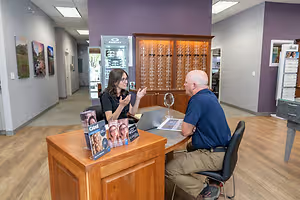
Low Vision Rehabilitation in Nampa & Kuna
Helping You Continue Doing What You Love
What Is Low Vision Rehabilitation?
Low vision rehabilitation is for people whose vision can't be fully corrected with glasses, contact lenses, medication, or eye surgery. Low vision typically refers to a level of vision loss that makes everyday activities more difficult, even with standard corrective lenses. Rather than focusing on restoring lost vision, the goal is to help you use your remaining vision as effectively as possible.
Through personalized evaluations, adaptive devices, and practical strategies, low vision rehabilitation can make everyday activities more manageable. Whether vision changes are related to macular degeneration, diabetic eye disease, glaucoma, or another eye condition, we'll work with you to develop solutions that fit your life.
Seeing Life Differently Doesn't Mean Living Differently

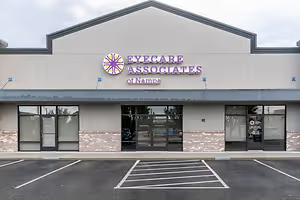
No matter where you are in the Treasure Valley, our team is committed to providing the same personalized care, trusted guidance, and advanced eye care that generations of local families have come to expect.
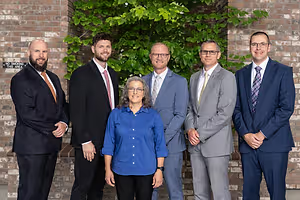
Our optometrists combine advanced clinical expertise with a patient-first approach, taking the time to understand your concerns and recommend care that's right for you. Get to know our team.
What Causes Low Vision?
Some of the most common causes of low vision include:
- Age-Related Macular Degeneration (AMD): A condition that affects central vision and can make reading, driving, and recognizing faces more difficult.
- Diabetic Eye Disease: Diabetes can damage the retina over time, leading to vision changes that may affect everyday activities.
- Glaucoma: Damage to the optic nerve can gradually reduce peripheral vision and affect overall visual function.
- Inherited Eye Conditions: Certain genetic eye diseases can cause progressive vision loss throughout life.
- Eye Injuries or Other Eye Diseases: Trauma and other medical conditions affecting the eyes may also lead to permanent vision loss.
While low vision rehabilitation can't restore lost vision, it can help you make better use of the vision you still have.
How Low Vision Support Can Help You Maintain Your Independence
Vision changes can affect every part of life, from reading the newspaper and preparing meals to recognizing faces or enjoying hobbies you love. Dr. Mullins' goal is to help you find practical ways to make these activities easier.
Depending on your needs, low vision rehabilitation may help you:
- Read books, mail, and medication labels more easily.
- Improve comfort while using phones, tablets, or computers.
- Watch television or enjoy hobbies with greater confidence.
- Navigate your home and community more safely.
- Maintain independence with everyday tasks.
- Continue participating in the activities that matter most to you.
Low Vision Evaluations in Kuna & Nampa
Every eye evaluation begins with understanding you, not just your eyesight, but how vision changes are affecting your life. Our low vision optometrist will discuss the activities that have become more difficult, your personal goals, and the challenges you'd like to overcome.
Your evaluation includes a functional vision assessment to help us understand how you use your remaining vision in everyday situations. Based on your results, Dr. Mullins will develop a vision rehabilitation plan and recommend adaptive devices or strategies to support your independence.
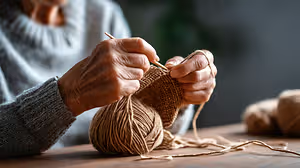

Low Vision Tools & Support
No two people experience vision loss the same way. After your evaluation, we'll recommend practical solutions to help you use your remaining vision more effectively. Your rehabilitation plan may include:
- Recommendations for adaptive low vision devices.
- Magnification solutions for reading and close-up tasks.
- Strategies to improve lighting and contrast in your home.
- Techniques to make everyday activities easier.
- Ongoing guidance and support as your vision needs change.
Low vision rehabilitation is available at Eyecare Associates of Nampa and Eyecare Associates of Kuna.
Meet Our Low Vision Eye Doctor
Low vision is a highly specialized area of eye care, and Dr. Oliver Mullins is one of the few optometrists in Idaho dedicated to helping patients maximize their remaining vision. As a Fellow of the International Academy of Low Vision Specialists (FIALVS), Dr. Mullins has advanced training in helping individuals adapt to vision loss.

Your Vision Still Has Possibilities
Schedule Your Low Vision Evaluation
Vision loss can change the way you do certain things, but it doesn't have to take away your independence. With personalized rehabilitation, adaptive devices, and the right support, many patients discover new ways to continue enjoying the activities they love. Schedule a low vision evaluation with Eyecare Associates of Kuna or Eyecare Associates of Nampa and learn how Dr. Oliver Mullins can help you make the most of your remaining vision.